How to Document Noise for a Landlord: A Practical Record
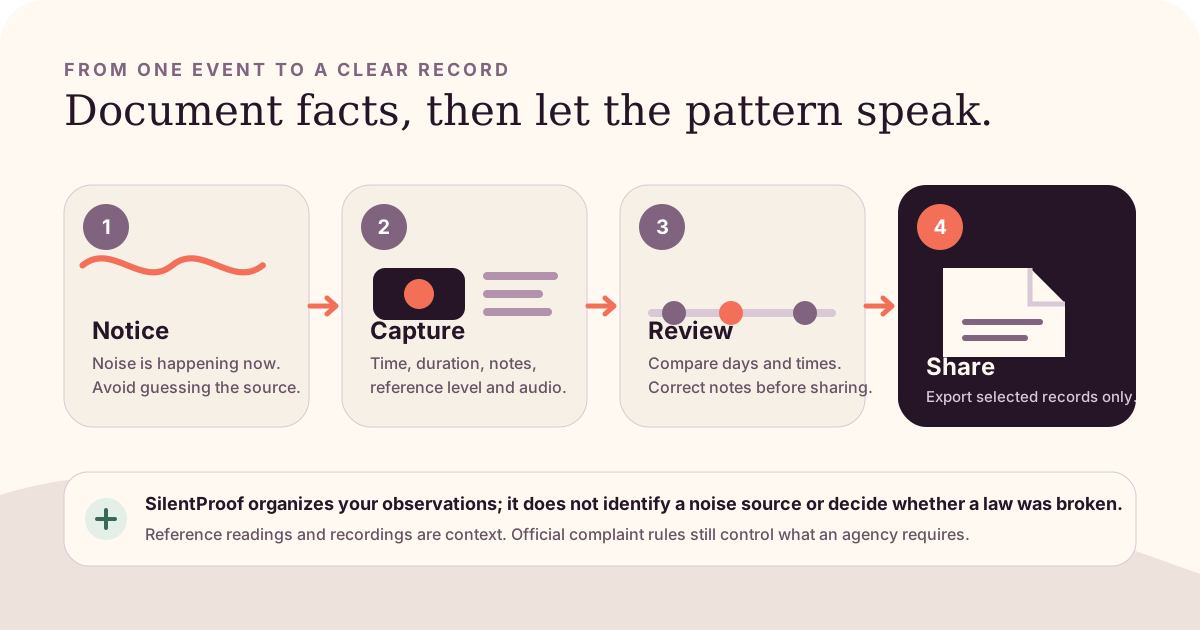
To document noise for a landlord, record each event when it happens: start and end time, a neutral description, where you heard it, room conditions, the effect on normal use of your home, and what follow-up occurred. Several consistent entries usually explain a recurring pattern better than one long message or a folder of unlabeled audio clips.
This guide focuses on creating a record someone else can review. It does not determine whether the noise is unlawful or require a landlord to reach a particular conclusion.
1. Read the lease and the correct local process
Before collecting measurements, find the rule that actually governs the situation:
- the lease’s quiet-hours or nuisance clause;
- building or condominium rules;
- a property-management reporting procedure;
- the municipal complaint category for that source;
- emergency guidance for threats, violence, fire, or immediate danger.
Save a copy or link and record the date you accessed it. Do not rely on an unsourced search snippet. Procedures differ by source: construction, commercial music, barking, equipment, and a noisy neighbor may be handled by different agencies.
If changing guests or a public listing suggest that a recurring disturbance may involve a vacation rental, keep the noise facts separate from assumptions about the booking. The short-term rental noise routing guide explains when the building, booking platform, local noise channel, or rental authority serves a different purpose.
New York City illustrates the point. The official NYC311 Noise Complaints page routes residents according to the source and location. Its Noise from Neighbor page also notes that many buildings have their own rules and suggests contacting the building owner, superintendent, or tenant association.
2. Create one contemporaneous entry per event
Write the entry during or immediately after the disturbance. Do not wait until the end of the month and reconstruct exact times from memory.
Use these fields:
| Field | Example |
|---|---|
| Date | August 11, 2026 |
| Start and end | 11:42 p.m.–12:06 a.m. |
| Description | Repeated heavy impacts and scraping, in clusters every few minutes |
| Perceived location | Audible from bedroom ceiling; exact source unknown |
| Conditions | Bedroom, windows closed, fan off |
| Impact | Woke from sleep; moved to living room |
| Reference reading | Same iPhone on bedside table; app-reported range noted |
| Follow-up | Building portal ticket #1042 submitted next morning |
Use observations, not diagnoses or accusations. “Heavy impacts audible from the ceiling area” is more defensible than “Unit 5B deliberately stomped all night.” You may be wrong about the source even when the disturbance is real.
A real-world note before and after editing
Too vague:
Upstairs was insane again. Nobody cares and this happens constantly.
Reviewable:
11:42 p.m.–12:06 a.m., bedroom, windows closed. Repeated heavy impacts and furniture-like scraping audible from the ceiling in four clusters. Woke me at 11:42 p.m. and resumed after approximately six quiet minutes. Exact source unknown.
The second version does not exaggerate. It preserves the time, location, pattern, and effect.
3. Use phone sound levels carefully
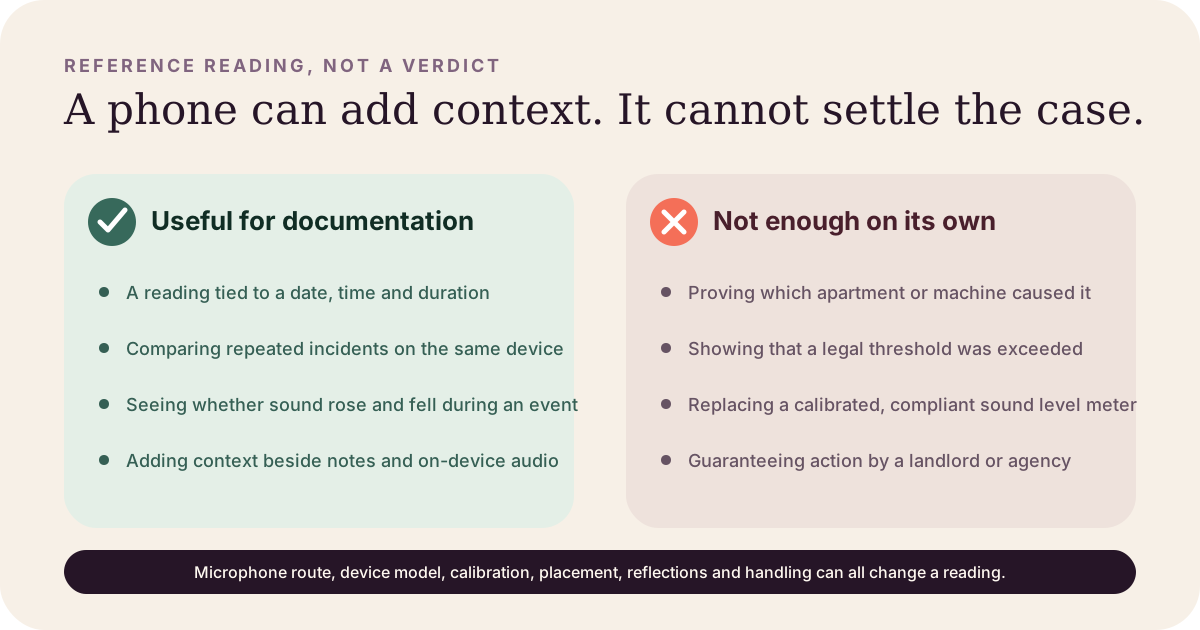
An iPhone sound reading can add reference context, especially across incidents recorded with the same device and placement. It is not automatically a certified sound level meter reading.
NIOSH laboratory studies found that accuracy varied among smartphone apps and configurations. Its evaluation of smartphone sound-measurement apps found some iOS combinations close to a reference instrument, while a later study found that calibrated external microphones improved accuracy and precision. These findings do not validate every app or turn a consumer-phone reading into official proof.
For a more repeatable personal log:
- use the same phone and app;
- place it in the same safe location;
- keep microphone openings unobstructed;
- note open or closed windows and nearby appliances;
- capture duration or a timeline, not just one peak screenshot;
- label the value “phone reference reading” in your complaint;
- use the official measurement process if the relevant rule requires one.
Read what iPhone decibel readings can and cannot show before citing a number.
4. Preserve context without over-collecting
Collect what helps explain the incident; avoid gathering unrelated personal information.
Useful context can include:
- a short description of the sound;
- a photo of a visible condition, such as active construction signage, when lawful and safe;
- the building ticket or service-request number;
- a copy of your own email to management;
- a brief audio sample if lawful, necessary, and privacy-conscious;
- a witness’s own written account, in their own words.
Do not trespass, point a camera into another home, provoke a confrontation, or secretly record conversations based on an assumption that “evidence collection” overrides privacy law. Audio-consent, surveillance, and admissibility rules depend on jurisdiction, place, participants, and purpose. Our recording-law overview explains why you should obtain local legal advice before relying on audio.
Keep original files and a read-only exported copy. Use clear filenames such as 2026-08-11_2342_bedroom-incident rather than recording-final-2. Back up only to a location you control, and remove unrelated personal details before sharing a packet.
5. Review the pattern before writing the complaint
After several entries, summarize instead of attaching an unexplained data dump. Count only what your record supports.
Example:
From August 3 through August 12, I recorded six incidents audible in the bedroom between 10:48 p.m. and 1:17 a.m. Five involved repeated impacts or scraping from the ceiling area; one involved amplified music. The incidents lasted 9–41 minutes. Four interrupted sleep. I reported the issue through the building portal on August 6 (ticket #1042).
A useful summary answers:
- How many incidents occurred, and over what date range?
- What times and rooms recur?
- Which sound descriptions repeat?
- What effect occurred?
- What did you already try?
- What specific response are you requesting now?
Do not average app-reported dB values unless you understand that metric and used a consistent method. A simple range or incident-by-incident table is easier to audit.
6. Send a specific written request
Use the landlord’s designated channel if one exists, and keep a copy. A concise complaint can follow this structure:
- State the recurring problem without assigning motives.
- Give the date range, frequency, common time window, and room.
- Describe the effect on your use of the apartment.
- Refer to your attached incident summary.
- Mention earlier tickets or communications.
- Ask for a specific next step and a written response date.
For example:
Please confirm by August 20 whether management will review the building’s quiet-hours policy, contact the relevant unit, or inspect for a building-related source. I have attached a two-page incident summary covering August 3–12.
Use our editable landlord noise complaint letter rather than starting from a blank email.
7. Keep a follow-up log
The record should continue after the first complaint. Add:
- the date and channel used;
- recipient or department;
- ticket or service-request number;
- promised next step;
- response received;
- later incidents;
- date you followed up.
If local guidance directs you to a non-emergency city service, use the exact source category and retain the confirmation number. In New York City, police response to a neighbor-noise complaint depends on competing emergencies, and the official NYC311 page says officers can take action when the noise is still occurring. SilentProof does not submit or monitor a 311 request.
For danger, threats, violence, fire, or another emergency, use the emergency guidance for your location instead of waiting to complete a noise log.
How SilentProof supports this workflow
SilentProof helps iPhone users create an incident while the details are fresh, keep timestamps, reference sound levels, location context, notes, and optional audio together, and export a readable PDF summary. Data stays on-device by default. The free tier includes unlimited incident recording and one PDF export; Pro provides unlimited PDF exports through a one-time purchase.
The app does not identify a source, certify a measurement, decide whether a rule was broken, give legal advice, file a complaint, or guarantee a response. You decide what to record and share.
If noise is happening now, start with the noise complaint app guide. If the recurring source appears to be overhead, continue with the upstairs-neighbor complaint process.
Documentation checklist
Before sending a complaint, confirm that you have:
- separate, contemporaneous entries;
- actual start and end times;
- neutral sound and location descriptions;
- room conditions and impact;
- clearly labeled phone reference readings, if used;
- original files preserved;
- sensitive or unrelated information removed from shared copies;
- prior ticket and service-request numbers;
- the applicable lease or official process;
- one specific request for the recipient.
This guide is general information, not legal advice. Requirements and recording laws vary. Seek qualified local advice when rights, safety, privacy, or formal proceedings are involved.