How to File an Upstairs-Neighbor Noise Complaint
To file an upstairs-neighbor noise complaint, first create a short incident record, then check the lease or building process, contact the neighbor once if it is safe, and send management a factual written request. If the problem continues, follow the correct non-emergency city or tenant-support process and keep every ticket or service-request number.
Do not wait for a perfect decibel reading. Footsteps and furniture impacts travel through a building differently from airborne music, and a phone may not represent structure-borne or low-frequency energy well. Dates, duration, room, repeated pattern, and effect are essential context.
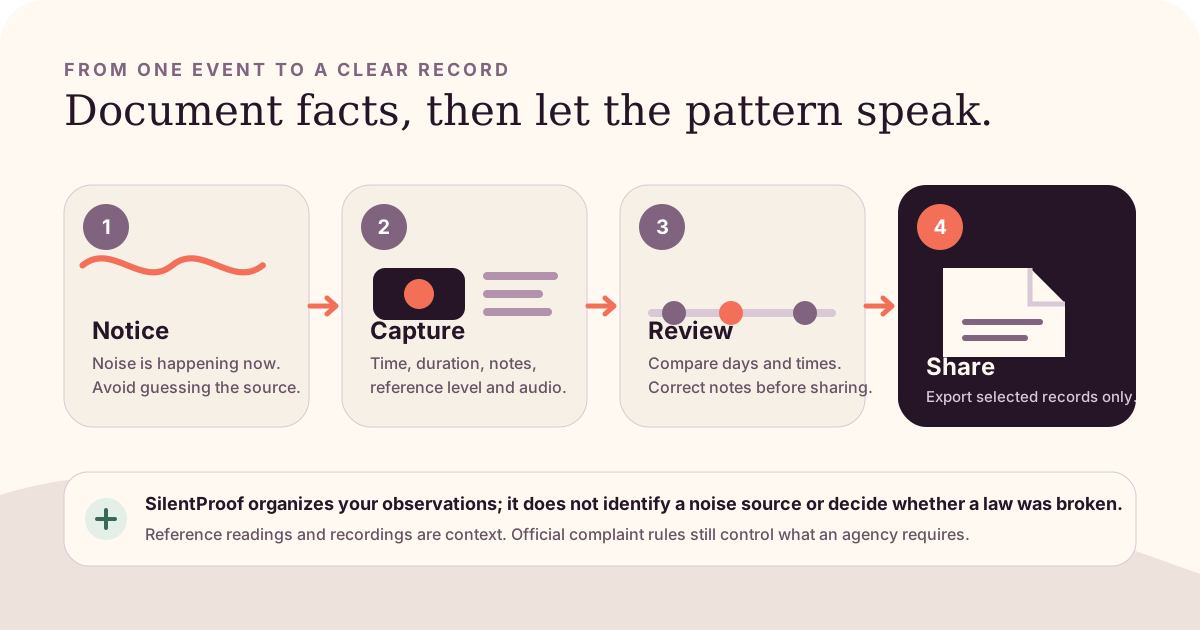
Safety first: skip direct contact if there have been threats, harassment, violence, stalking, or any reason you feel unsafe. Use the building’s formal channel, a local support service, or emergency assistance appropriate to the situation.
1. Separate airborne noise from impact noise
You do not need to diagnose the building, but a neutral description helps management understand what to investigate.
- Airborne sound: music, television, voices, or barking transmitted through air and partitions.
- Impact or structure-borne sound: footsteps, dropped objects, exercise equipment, chair movement, or vibration transmitted through floors and the building structure.
Avoid claiming the upstairs tenant is definitely responsible. Pipes, elevators, doors, rooftop equipment, and adjacent units can create misleading transmission paths. Write “repeated impacts audible from the bedroom ceiling area” rather than “the tenant in 5B is stomping.”
This distinction also explains why an ordinary audio clip can sound unimpressive on playback even when the event is disruptive in the room. Phone microphones, speakers, and audio processing may underrepresent low-frequency vibration and building-borne impacts.
2. Record several incidents in a consistent format
Create one entry during or immediately after each event:
| Field | Example |
|---|---|
| Start and end | 12:07–12:26 a.m. |
| Sound | Heavy impacts in clusters; scraping lasting 8–12 seconds |
| Perceived location | Bedroom ceiling area; source unconfirmed |
| Pattern | Four clusters, separated by several quiet minutes |
| Conditions | Windows closed; bedroom fan off |
| Impact | Woke from sleep; moved rooms |
| Follow-up | Courtesy message sent the next day |
One entry may reflect an isolated event. A week or two of accurate entries can show whether the same time, room, and sound type recur. Do not pad the record with guesses or describe an event as continuous if there were long quiet intervals.
If you use a phone sound reading, label it as a reference reading. Keep the same phone in the same position and record duration, not only a peak. Read how to document apartment noise for a complete field list.
3. Check the lease and building rules
Look for:
- quiet-hours language;
- nuisance or conduct clauses;
- floor-covering requirements;
- complaint and maintenance channels;
- anti-harassment or neighbor-dispute procedures;
- emergency contact instructions.
A floor-covering clause may be relevant to impact transmission, while a maintenance request may be more appropriate when plumbing or building equipment is suspected. Quote the exact current language instead of asserting a generic “right to quiet” without local context.
Keep a copy of the rule you relied on and note when you accessed it. If your building provides a portal, use it so the report receives a ticket number.
4. Make one calm request—when safe
The person upstairs may not know what transmits through the floor. If direct contact is safe and permitted, send one short request during daytime hours. Do not confront them while angry or stand outside their door recording a conversation.
Example:
Hi—sound has been carrying into my bedroom several nights between about 11:30 p.m. and 1 a.m., mainly heavy impacts and furniture-like scraping. Would you be able to reduce that activity during the building’s quiet hours? I wanted to ask directly before contacting management. Thank you.
The message includes the time window, observation, and requested change. It does not threaten, insult, or make a legal accusation. Save your own message and any response. Do not continue repeated direct contact if the other person asks you to stop or the interaction becomes hostile.
5. Send management a factual written complaint
If the pattern continues—or direct contact is inappropriate—use email or the designated building system. Keep the main message short and attach a concise incident summary.
Include:
- the date range and number of logged incidents;
- the usual time window and affected room;
- neutral descriptions of the sound;
- the effect on sleep, work, or ordinary use;
- the step you already took, if any;
- the relevant building rule;
- the action you want management to consider;
- a reasonable date for a written response.
Sample complaint
Subject: Recurring late-night impact noise — request for review
Hello [Manager],
Between August 3 and August 12, I logged six late-night incidents in the bedroom, generally between 10:48 p.m. and 1:17 a.m. The recurring sound was heavy impacts and furniture-like scraping audible from the ceiling area. Four incidents woke me. I have attached a two-page summary with dates, duration, room conditions, and my prior building ticket (#1042).
I cannot confirm the exact source. Please review the building’s quiet-hours and floor-covering rules and let me know whether management can investigate or contact the relevant resident. Please confirm the next step by August 20.
Thank you, [Name / unit / preferred contact]
Customize this with our landlord noise complaint letter template. Do not include unnecessary medical, family, or location details in a packet that may be forwarded.
6. Understand what a phone measurement cannot do
An iPhone reference timeline can support your own incident history. It cannot by itself:
- determine which unit caused the sound;
- diagnose impact-insulation performance;
- reproduce vibration that the microphone did not capture;
- show that an official instrument would report the same value;
- prove a lease or noise-code violation;
- guarantee action by management or an agency.
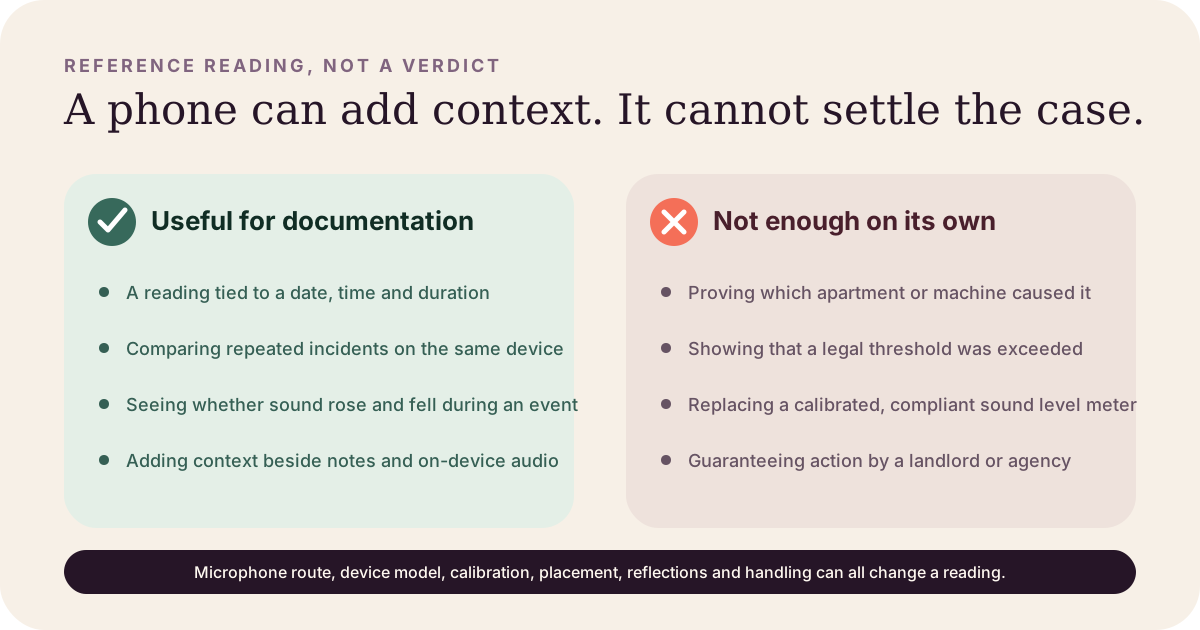
NIOSH found that some iOS sound-measurement app configurations performed well in controlled testing, while app and hardware combinations varied. Its smartphone-app evaluation should not be interpreted as validation of every app. When a code requires a specified measurement method, use the official inspection or a qualified acoustical professional.
7. Escalate through the correct local channel
If management does not respond, use a process matched to your location and situation. Options may include:
- a building owner or regional management office;
- a tenant association or resident-services team;
- a municipal non-emergency complaint service;
- mediation;
- a local tenant organization or legal-aid provider;
- a qualified acoustical consultant for a technical building problem.
If you are unsure whether the next step belongs with a neighbor, maintenance team, landlord, or local agency, use the neighbor-noise routing guide to match the observed source and urgency to a channel before escalating.
New York City’s official Noise from Neighbor page says residents may report a noisy neighbor and notes that many buildings have their own rules. NYC311 says NYPD response may take up to eight hours when officers are not handling emergencies, and action may depend on the noise still occurring when they arrive. Its broader Noise Complaints page also lists mediation as an option for chronic noise.
That is one city’s process, not a universal model. Check the official source where you live. Preserve the service-request number, agency name, submission time, category selected, and outcome. Our 311 complaint script can help organize details, but SilentProof does not submit the request.
Use emergency services for immediate danger, threats, violence, fire, or another emergency—not simply because an incident is inconvenient or because you want a faster noise response.
8. Continue the record without escalating the conflict
After a complaint:
- log new events using the same factual format;
- record management responses and inspection dates;
- avoid retaliatory noise or repeated confrontations;
- add corrections transparently;
- keep originals and share only the necessary summary;
- follow up by referencing the prior ticket, not by opening duplicate requests unless instructed.
If the problem may involve defective flooring, pipes, HVAC, or another building condition, ask whether management can inspect rather than focusing only on neighbor conduct.
Where SilentProof fits
SilentProof helps you start an incident on iPhone, retain timestamps, reference sound levels, optional audio, and context, then export a PDF summary. Records stay on-device by default. The free tier includes unlimited incident recording and one PDF export; Pro removes the export limit with a one-time purchase.
It is a documentation tool, not a certified meter, source-identification system, legal service, city-reporting portal, or guarantee of enforcement. You remain responsible for lawful recording and for deciding what information to share.
If the next incident is happening now, see the SilentProof noise complaint app workflow. If nighttime dB claims are confusing the issue, read what “too loud” means in an apartment.
Complaint packet checklist
- One entry per incident
- Dates, start/end times, and affected rooms
- Neutral description and unconfirmed source clearly labeled
- Building rule or official process checked
- Phone numbers described only as reference readings
- One concise pattern summary
- Prior emails, tickets, and service-request numbers
- Specific requested action and response date
- Sensitive information removed from shared copies
- Emergency and non-emergency channels used appropriately
This guide provides general information, not legal advice. Lease terms, tenant remedies, privacy rules, and complaint procedures vary by jurisdiction.