Short-term rental noise: who to contact and what to record
A recurring disturbance may involve a building rule, a booking-platform policy, a local noise process, or a separate short-term rental regulation. Keep the facts together, then choose the route that actually matches the issue.
Before reporting, separate observation from assumption
Changing visitors, luggage, rideshare drop-offs, or an online listing may suggest short-term rental activity, but none proves that a particular booking caused the noise. Record the disturbance you personally observed. If you have a public listing URL that clearly corresponds to the property, preserve it without contacting or identifying guests.
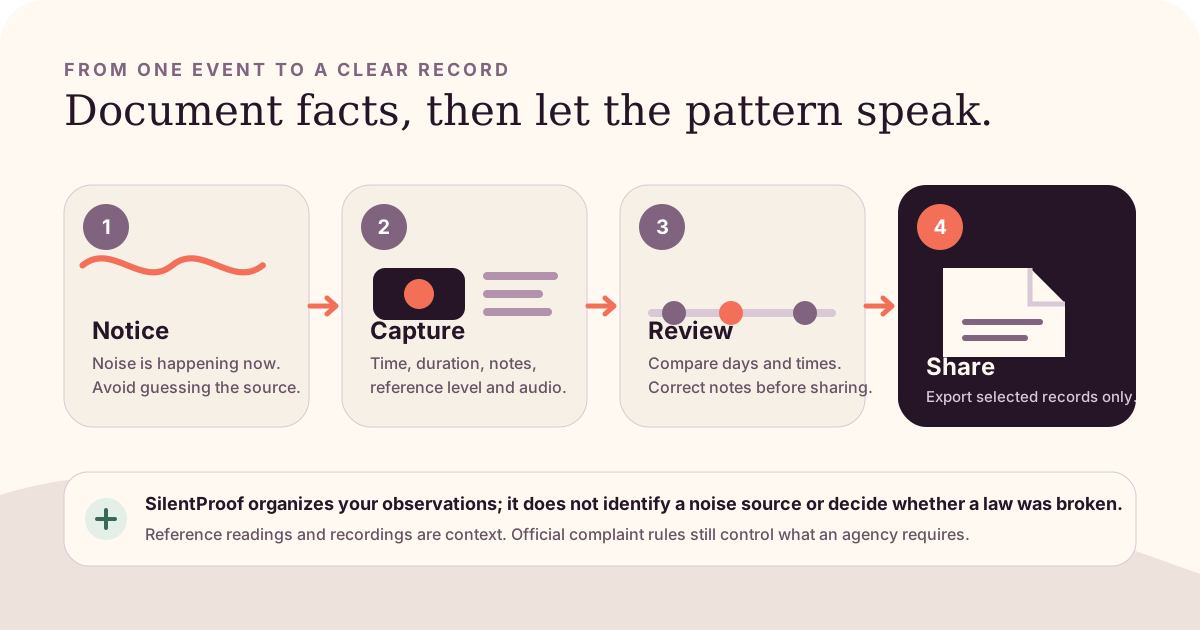
Incident: start/end time, sound type, pattern, affected room, and impact.
Property: address or unit only when known; otherwise record perceived direction.
Rental context: public listing URL, host/local-contact details, or building notice when legitimately available.
Prior action: message, platform case, building ticket, city report, and confirmation number.
Do not trespass, photograph through windows, confront guests, publish personal information, or create audio recordings without considering local privacy and consent rules.
Keep the record factual and narrow. A log does not establish who booked the property or whether the rental is legal.
The three reporting routes
These routes can run in parallel when they address different responsibilities. Avoid sending the same accusation everywhere without checking each channel’s purpose.
Route 1
Host, owner, landlord, or building
Use the local contact, owner, front desk, landlord, HOA, or property manager when the immediate goal is to stop a disturbance or enforce building quiet hours. If direct contact is safe, send one calm message with the current time window and a specific request.
Provide the affected unit or room, start time, neutral description, whether the event is ongoing, and previous building ticket. Do not demand personal information about guests or speculate about motives.
Route 2
Booking platform
Use a platform’s dedicated community route when you can reasonably connect the property to that service. Airbnb’s officialNeighborhood Supportaccepts reports of parties, noise, and neighborhood concerns. Airbnb distinguishes this from reservation support and directs emergencies to local emergency services.
Vrbo’s officialStay Neighborly guidancerecommends contacting the host first when possible and lists details to prepare for its complaint form, including the listing URL, issue description, and available formal documentation.
Platform processes and policies can change. Use the platform’s current official form, retain the case number, and do not promise yourself or others that a listing will be removed.
Route 3
Local noise or rental authority
A noise complaint and a rental-registration complaint may be separate. Use the local noise channel for the disturbance; use a short-term rental enforcement route only when you are reporting a suspected registration, zoning, occupancy, or licensing issue.
For example, New York City’s Office of Special Enforcement tells neighbors to use 311 or its online form for suspected illegal short-term rentals and asks for a specific address, apartment number, and relevant advertisement websites when available. See the officialNYC information for neighbors.
Los Angeles publishes a separateHome-Sharing resources pagefor unregistered rentals and directs other short-term rental issues to the appropriate city agency. These are city-specific examples, not universal rules or contact details.
Match urgency to the problem
Disturbance happening now
Use an available local contact, building channel, platform urgent-neighborhood route, or official non-emergency service.
Recurring but not urgent
Summarize several events and use the platform, property-management, or local administrative route that fits.
Immediate danger
Contact local emergency services. Do not wait for a platform, host, PDF export, or SilentProof workflow.
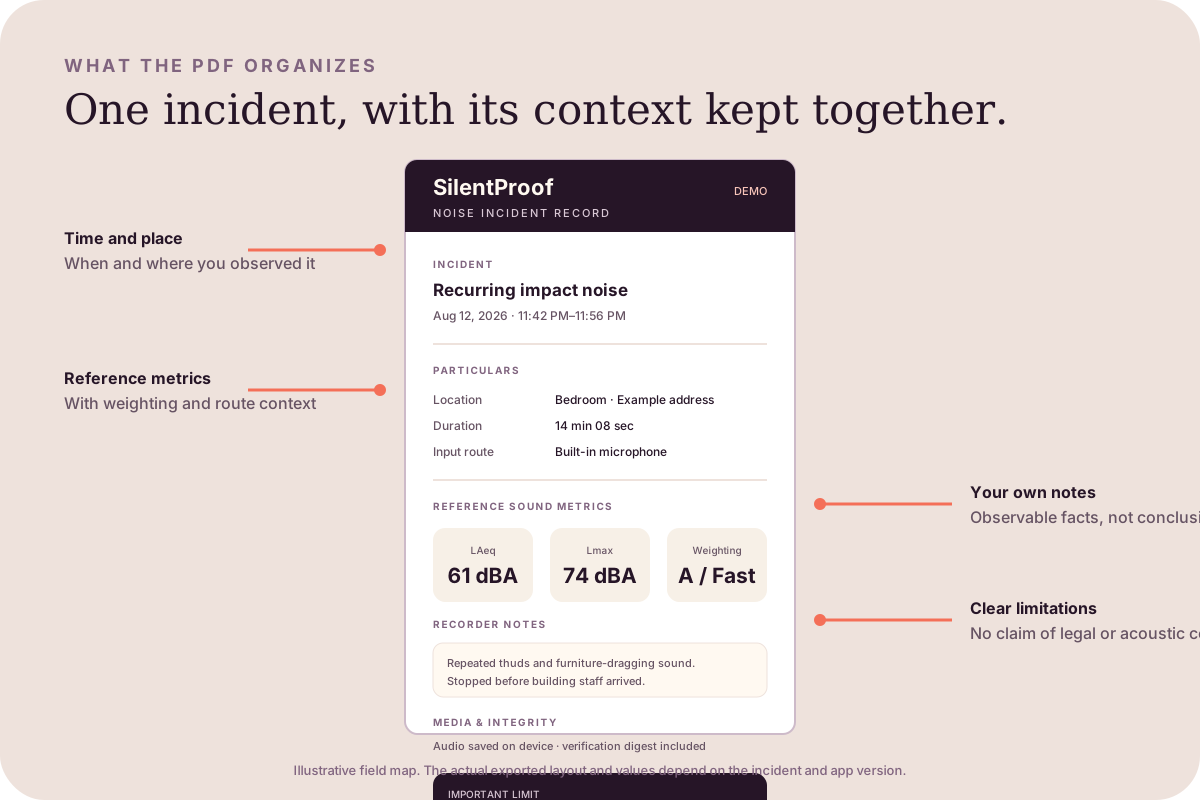
An illustrative record layout. Actual fields and values depend on the incident and app version.
Share the smallest useful packet
A platform or agency may ask for different information. Start with a concise incident table and confirmation history. Add audio, photos, or a listing link only when relevant, lawful, and requested. Remove unrelated names, faces, conversations, precise location history, or other personal information.
Phone decibel values are reference readings. They do not prove which guest, property, or listing caused a sound, whether a rental is legal, or whether an ordinance was violated. A receiving authority may require its own inspection or measurement method.
Where SilentProof fits
SilentProof helps iPhone users keep an incident’s timestamps, reference sound timeline, optional audio, location context, and notes together, then export a PDF summary. Records remain on-device by default. Free includes unlimited incident recording and one PDF export.
It does not confirm that a property is a short-term rental, identify a guest or host, certify measurements, file platform or city reports, provide legal advice, or guarantee an outcome.
Allow Microsoft Clarity to help us understand visits through heatmaps and session recordings? This applies only to this website. Website analytics privacy