Apartment Noise at Night: What dB Level Is Too Loud?
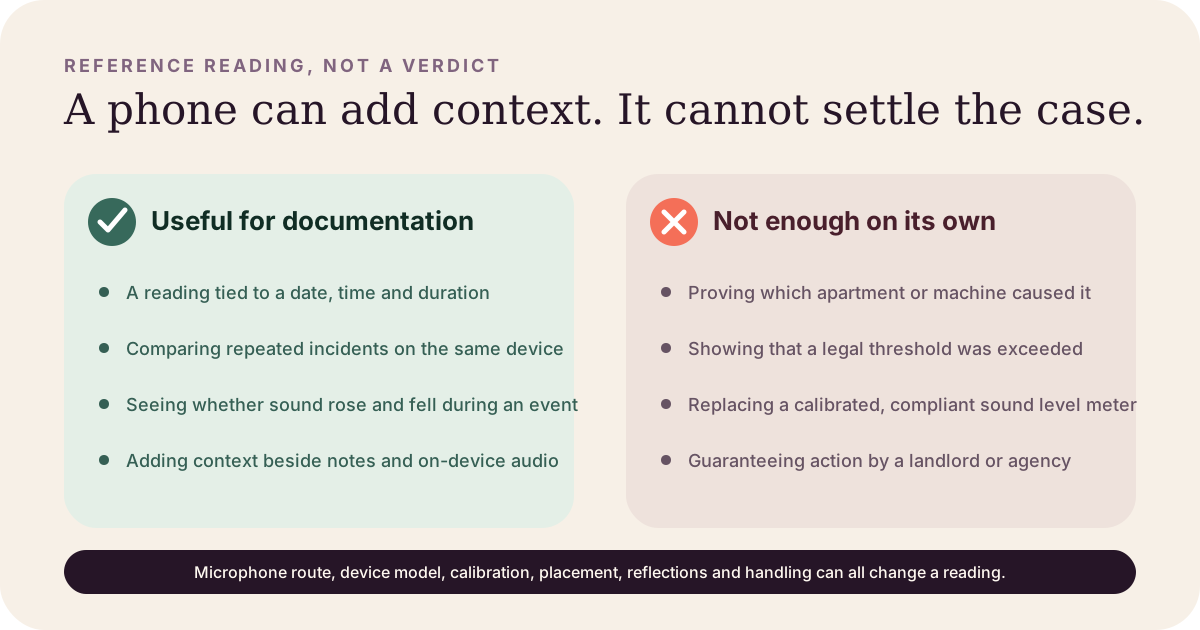
There is no single decibel number that makes apartment noise “too loud” everywhere. The answer depends on the source, time, duration, measurement location, and the rule that applies where you live. A phone reading can add useful context, but it cannot by itself establish that a neighbor violated a lease or local noise code.
The practical answer: first check the applicable building rule or city complaint category. Then record when the noise happens, how long it lasts, what it sounds like, where you heard it, and how it affected normal use of your home. Treat a phone dB reading as a reference, not a verdict.
Why a single dB number is not enough
A decibel is a logarithmic measure, not a percentage or a simple linear score. The National Institute of Standards and Technology explains that the scale is logarithmic because human hearing covers a very large range of sound pressure.
But the number displayed by an app is only one part of the measurement. To interpret it, you would also need to know:
- Weighting:
dBAemphasizes frequencies in a way intended to approximate human hearing;dBCanddBZanswer different questions. - Time metric: an instantaneous level, maximum level, and energy average such as
LAeqare not interchangeable. - Position: readings change with distance, walls, furniture, reflections, and whether the phone is inside or outside the affected room.
- Instrument: phone model, microphone condition, software, processing, and calibration can change the result.
- Rule: a lease clause, nuisance standard, and municipal decibel limit may use different tests.
That is why “my phone showed 68 dB” is incomplete without a timestamp, duration, location, source description, and the measurement method.
Do not use workplace limits as apartment limits
Search results often cite 85 dBA over eight hours. That number comes from occupational hearing-loss guidance. It is not a universal residential nuisance threshold. The NIOSH noise program is designed around workplace exposure and hearing conservation, not whether footsteps at midnight breach a lease.
Nighttime health guidance can also be easy to misuse. For example, the World Health Organization’s environmental-noise recommendations use long-term outdoor exposure metrics such as Lnight for sources including road, rail, and aircraft noise. Those population-level averages are not comparable to one short reading beside your bed. A 2022 review of environmental noise and sleep explains why event timing, exposure pattern, and sleep response all matter.
The reliable question is not “Which famous threshold can I quote?” It is “Which rule applies to this source, at this time, measured in which place and manner?”
A hypothetical nighttime scenario
Hypothetical example: suppose you are woken by furniture dragging and heavy impacts from the apartment above:
- Monday, 12:18–12:31 a.m.
- Wednesday, 11:47 p.m.–12:05 a.m.
- Friday, 1:06–1:22 a.m.
One Friday peak reading is less informative than the repeated pattern. A property manager can more readily review a record that shows the same noise type, room, time window, duration, and sleep impact across three nights.
A useful entry could read:
12:18 a.m., bedroom, windows closed. Repeated heavy impacts and furniture scraping from the ceiling area for approximately 13 minutes. Woke me and continued after I moved to the living room. Phone reference range recorded from the bedside table; no claim of certified measurement.
This wording separates observation from inference. You know where the sound appeared to come from, but you do not claim to know exactly who or what caused it.
What local rules may look like
Rules vary substantially even within one city. New York City, for example, routes complaints by noise source. Its Noise from Neighbor page tells residents that many buildings have their own rules and that they can contact the owner, superintendent, or tenant association. A different NYC311 page sets a nighttime numerical limit for certain bar and restaurant music, measured in specified locations and conditions.
That distinction matters: a published limit for commercial music should not be copied onto an upstairs-footstep complaint. Before quoting a threshold, verify all of the following:
- It applies to your city or county.
- It applies to the correct source category.
- It applies at that time of day.
- It specifies where and how an official measurement is made.
- The rule has not been superseded.
Use the sourced city reference that matches your location: New York City, Chicago, or Los Angeles. Each page distinguishes source-specific rules and official measurement conditions from a generic dB chart. For another location, use the current municipal or county website.
What to record tonight
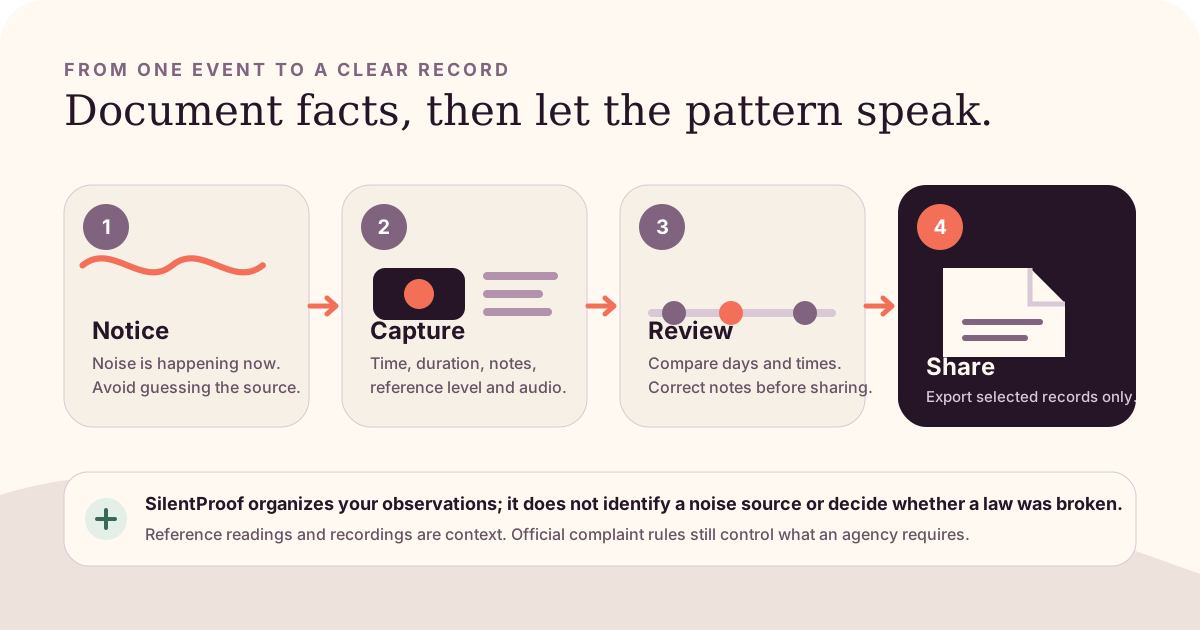
Create a separate entry for each disturbance. Include:
| Field | Useful detail |
|---|---|
| Start and end | Actual clock time, not “late at night” |
| Sound | Impacts, bass, voices, barking, machinery, or another neutral description |
| Perceived origin | Ceiling, hallway, street-facing wall—without guessing who caused it |
| Room and conditions | Bedroom; windows closed; phone on bedside table |
| Frequency | Continuous, every few minutes, or a short cluster |
| Impact | Woke from sleep, conversation interrupted, or room temporarily unusable |
| Reference reading | App, phone model, weighting/metric if shown, and consistent placement |
| Follow-up | Neighbor contacted, building ticket, email, or city service-request number |
Do not create a longer recording than you need, and do not assume that recording a conversation is lawful. Review our recording and privacy basics before capturing voices or sharing audio.
Use the same method each time
Consistency makes a series easier to compare:
- Put the same iPhone in the same place when it is safe to do so.
- Keep the microphone opening unobstructed by bedding, fingers, debris, or a case.
- Note whether windows and doors were open or closed.
- Record a short baseline in the same room when the disturbance is absent.
- Do not move closer to the source merely to obtain a higher number.
- Preserve the original entry; add later corrections as notes instead of silently rewriting it.
These steps do not turn the phone into a certified sound level meter. They simply reduce avoidable variation and make your own entries easier to understand.
Turn several nights into a reviewable record
SilentProof is designed for this pattern-first workflow. On iPhone, you can start an incident while the noise is happening, keep timestamps and reference sound levels together, add context, and export a PDF summary. Records stay on your device by default, and the free tier includes unlimited incident recording plus one PDF export.
SilentProof does not determine whether noise is illegal, identify the source, file a city complaint, or guarantee how a landlord or agency will respond. Its role is narrower: help you keep a consistent record instead of reconstructing several nights from memory.
If the noise is happening now, see how the noise complaint app works. If you already have several entries, use the landlord noise complaint letter template to summarize the pattern and state the action you are requesting.
Bottom line
An apartment is not automatically compliant below one universal number or automatically in violation above it. Use the applicable local or building rule, and treat decibels as one field in a broader incident record. Repeated dates, durations, neutral descriptions, room conditions, impact, and documented follow-up usually explain the problem more clearly than a single peak screenshot.
This guide provides general information, not legal advice, an acoustic certification, or a determination that any noise violates a rule.