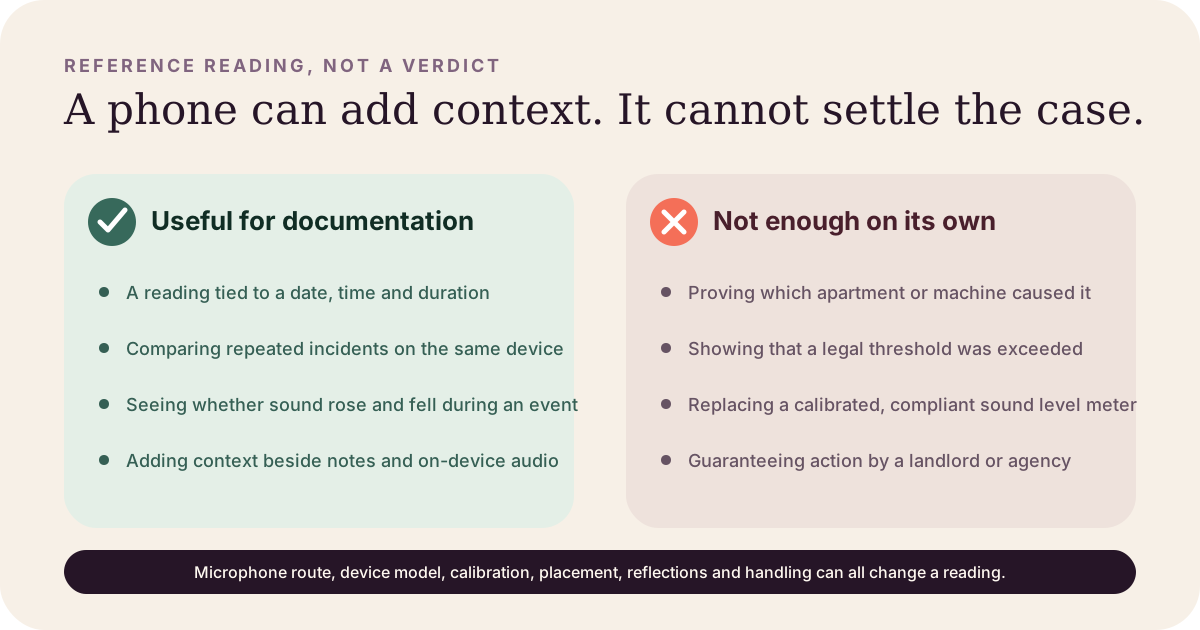
The evidence supports a narrow claim
NIOSH tested specific smartphone app-and-device combinations against laboratory reference instruments. Some iOS combinations performed close to the reference; other apps and platforms varied. NIOSH’s own iOS Sound Level Meter app is tested and validated within stated conditions, but NIOSH also says it is not intended to replace a professional meter or be used for compliance measurements without the appropriate setup.
Those results do not automatically validate SilentProof. See the NIOSH Sound Level Meter technical specifications, the original 2014 smartphone-app evaluation, and the external-microphone follow-up study.
The tools also serve different jobs. Our NYC Noise, NIOSH SLM, and SilentProof comparison separates citywide noise-data collection, workplace exposure measurement, and tenant incident documentation before comparing their outputs and limits.
What SilentProof calculates
SilentProof’s iOS measurement path keeps the following context with an incident where available:
| Element | Purpose | Important limit |
|---|---|---|
| Reference sound level | Shows how the phone-reported level changes during the event | Not a traceable calibrated measurement |
| LAeq-style energy average | Integrates acoustic energy over the valid recorded duration | Depends on the input and calibration path |
| A/C/Z frequency weighting | Applies the selected frequency response | Does not make the phone IEC-certified |
| Fast/Slow time weighting | Controls short-term response and smoothing | Not interchangeable with one-sample peaks |
| Input route and sample rate | Preserves how audio entered the app | Bluetooth and external routes can behave differently |
| Calibration and quality notices | Records configured offsets, overload, and route warnings | An offset is not a laboratory calibration certificate |
What the automated tests actually verify
SilentProof includes calculation and integrity tests for energy-domain averaging, elapsed-duration integration, sample-rate changes, Fast/Slow timing, overload flags, calibration-offset handling, continuous coverage, and report verification digests. These tests help prevent software mistakes such as averaging decibels arithmetically or bridging a missing measurement gap.
They do not prove end-to-end acoustic accuracy. A unit test can verify the formula given known samples; it cannot establish how every iPhone microphone, case, room, route, or app version compares with a traceable reference meter. SilentProof does not publish a completed laboratory validation dataset and does not claim NIOSH’s ±2 dBA result.
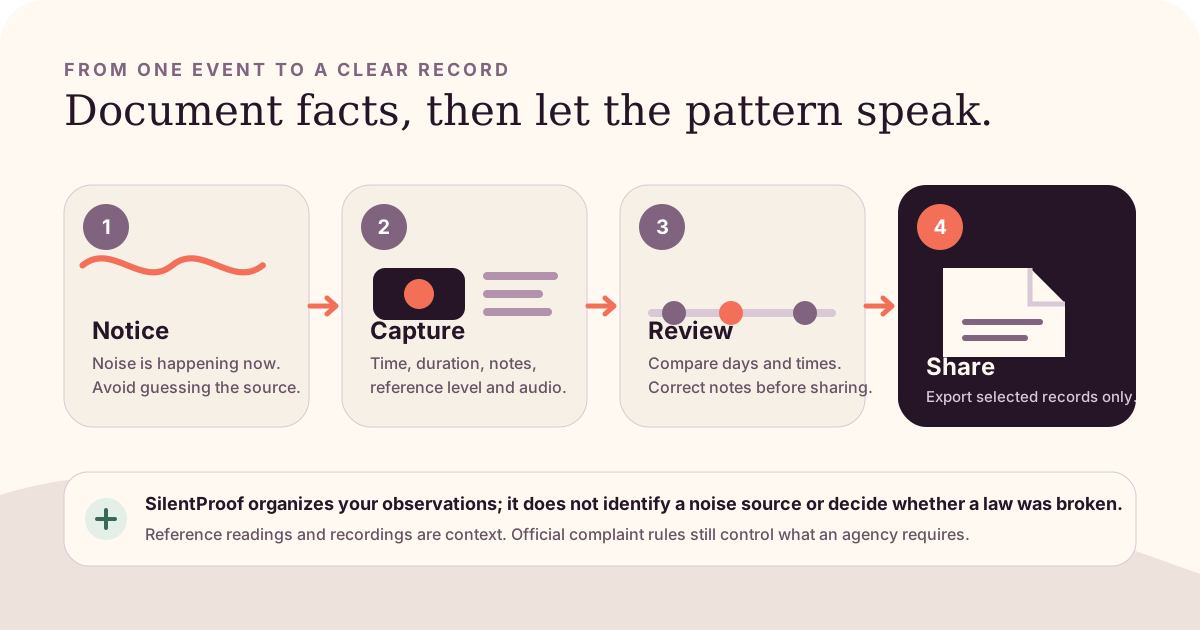
How to make your own entries more comparable
- Use the same iPhone, app, microphone route, weighting, and time setting.
- Keep microphone openings clear and remove anything that visibly blocks them.
- Place the phone in the same safe location; do not hold or move it to chase a higher number.
- Note the room, open or closed windows, nearby appliances, and unusual conditions.
- Record duration and a timeline rather than relying on one peak screenshot.
- Describe what you observed without claiming that the phone identified the source.
- Use the official measurement procedure whenever a code or agency requires one.
When you need a professional meter
Use an appropriately calibrated instrument and qualified professional when the task is regulatory compliance, occupational exposure, an acoustic survey, expert testimony, building-system diagnosis, or another decision that requires traceable accuracy. NIOSH similarly notes that sound apps can provide area-noise information but may not comply with regulatory requirements in its noise-exposure guidance.
The product promise is organization, not certification.
SilentProof helps keep a phone’s reference reading beside the time, duration, notes, location context, audio status, and repeated-event history. It does not determine whether a violation occurred.