Apartment Noise at Night: What dB Level Is Too Loud?
decibel night-noise apartment
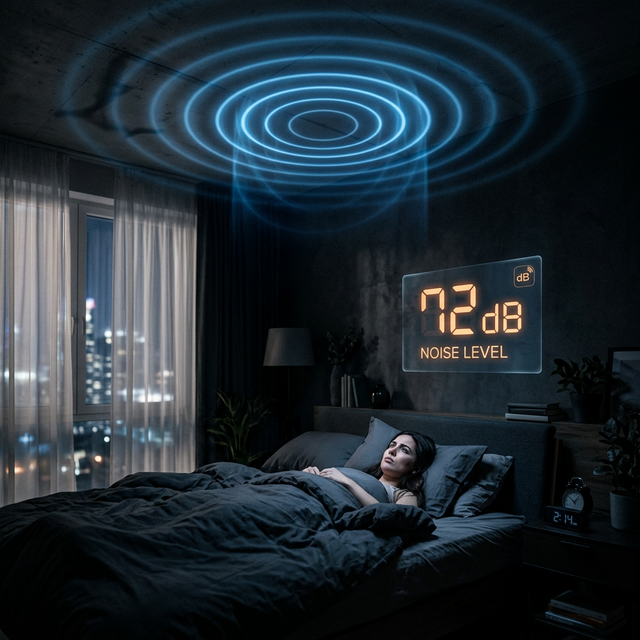
“Too loud” is subjective. Decibel ranges help make complaints clearer and more actionable.
Quick dB context
Typical reference points:
- ~30 dB: quiet room
- ~40-45 dB: low background indoor noise
- ~60 dB: normal conversation nearby
- ~70 dB+: clearly disruptive in many residential nighttime contexts
These are practical references, not legal conclusions.
Why nighttime noise feels worse
At night, baseline ambient noise is lower. The same source can feel significantly more disruptive because:
- Sleep is interrupted
- Repetition is easier to notice
- Lower background makes peaks more obvious
That is why “pattern and timing” are as important as peak dB.
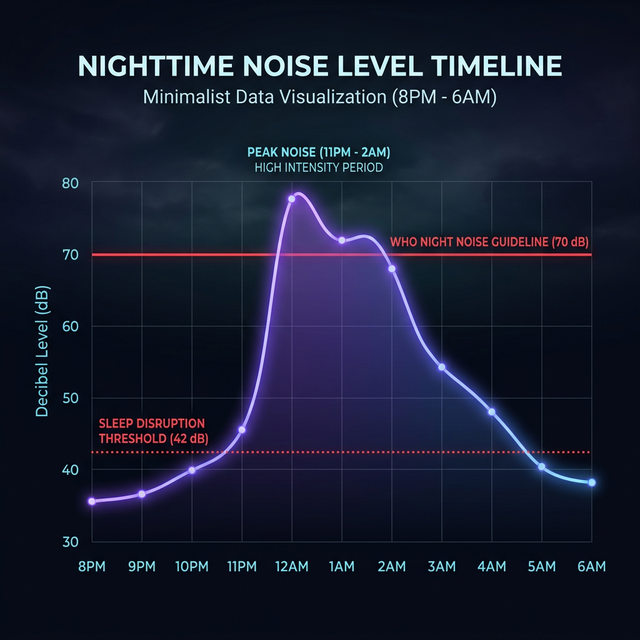
What to document
For each event capture:
- Start/end time
- Approximate dB range
- Duration above your usual baseline
- Context notes (for example, bedroom, windows closed)
dB alone is not enough
A strong complaint package includes:
- Repeated incident timeline
- Disturbance pattern across multiple days
- Written impact summary
Add a formal letter when escalating:
City thresholds differ
Always check local guidance and enforcement process:
- NYC reference guide: /regulations/nyc
Free vs Pro workflow
You can start with free incident recording. If you need repeated PDF exports for ongoing escalation, review:
Informational guide only. Not legal advice.