How to Document Noise for Your Landlord
You’ve been losing sleep for weeks. The noise from upstairs, next door, or outside is unbearable. You’ve complained verbally, but nothing changes. The problem? Verbal complaints are easy to ignore. A written complaint with a clear record is much easier to review.
Here’s how to document noise disturbances so your landlord has something clearer to act on.
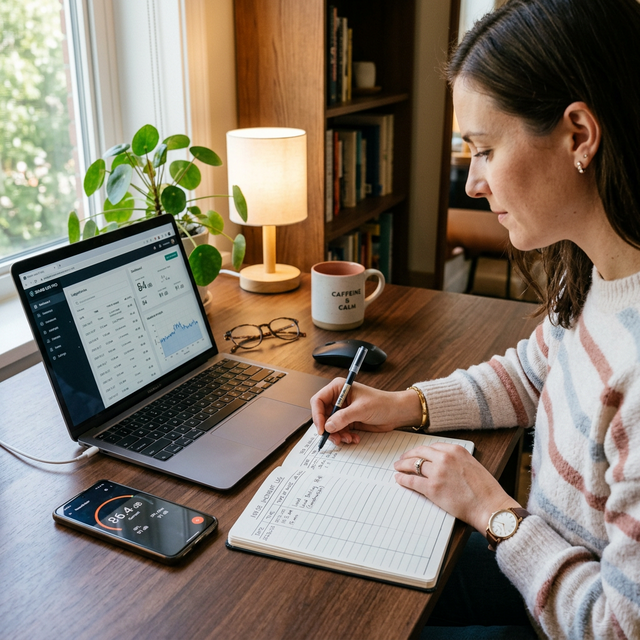
Step 1: Start a Noise Log
Keep a consistent record of every noise event. For each entry, note:
- Date and time the noise started and stopped
- Duration of the disturbance
- Type of noise (music, construction, barking, footsteps, etc.)
- Decibel level if you can measure it
- Your location when you heard it
- Impact on you (couldn’t sleep, couldn’t work, etc.)
Consistency matters more than detail. A log showing noise at 11 PM every Friday for six weeks is more compelling than one detailed entry.
Step 2: Measure Decibel Levels
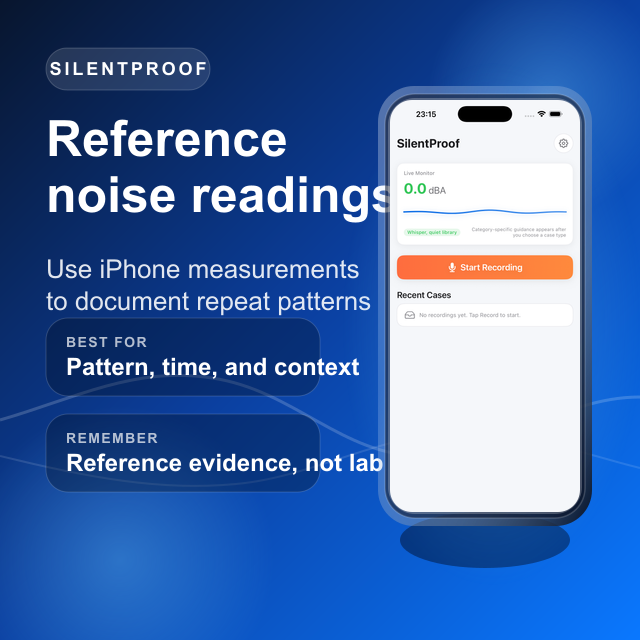
Subjective descriptions like “very loud” are hard to compare across incidents. Measurable details help. Use a sound level meter app on your phone to capture decibel readings during noise events.
SilentProof helps organize this into one workflow: it tracks sound levels, creates a visual timeline, and adds timestamps and location context. When you’re done, you have a clearer incident record, not just a number.
Step 3: Take Notes in Real Time
Add context to your measurements. What was happening? Where were you in your apartment? Could you hear the noise with windows closed? These details help establish that the noise is unreasonable and disruptive.
Step 4: Know Your Local Noise Code
Look up your city’s noise regulations. Most cities have specific decibel limits for residential areas, often different for daytime and nighttime. This helps you connect your incident log to the local rules that may apply.
Step 5: Write a Formal Complaint
Send your landlord or property manager a written complaint. Include:
- A summary of the problem
- Your noise log or PDF report
- Specific dates and times
- Decibel readings if available
- The relevant section of your local noise code
- What you’re asking them to do
Email is fine. It creates a paper trail. Keep copies of everything.
Step 6: Follow Up
If nothing changes after your written complaint, escalate:
- Send a follow-up email referencing your original complaint
- File a complaint with your city’s 311 service
- Contact your local tenant advocacy organization
- Consult a tenant rights lawyer if the situation is severe
The Key Principle
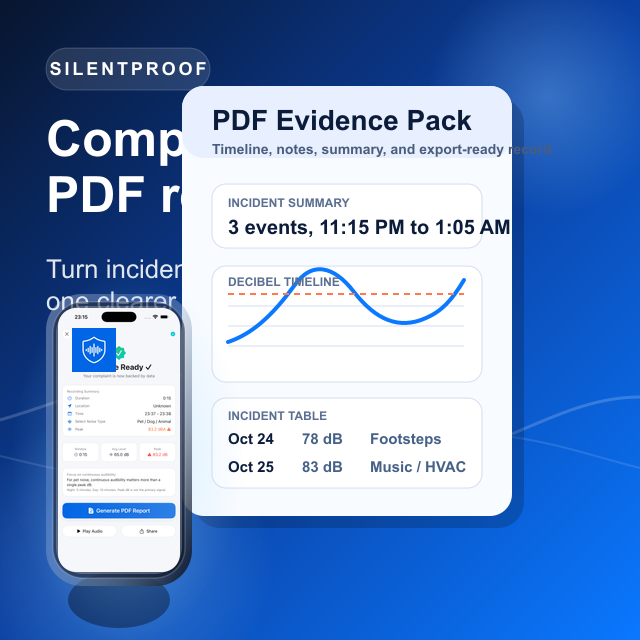
The difference between a complaint that gets ignored and one that gets reviewed is documentation quality. Every noise event you log with timing, level, and context makes the pattern easier to understand. Tools like SilentProof help organize decibel readings, timestamps, location details, and incident notes into a single PDF report you can send to your landlord or attach to a 311 report.
Start documenting tonight. The sooner you build a consistent incident log, the easier it is to show the pattern clearly.
Helpful Next Steps
- Landlord letter template: /templates/landlord-noise-complaint-letter
- 311 filing script: /templates/311-noise-complaint-script
- Free vs Pro details: /pricing